



Surveyor Safety Vests for Engineers, Inspectors, and Construction Managers
- 30 min read
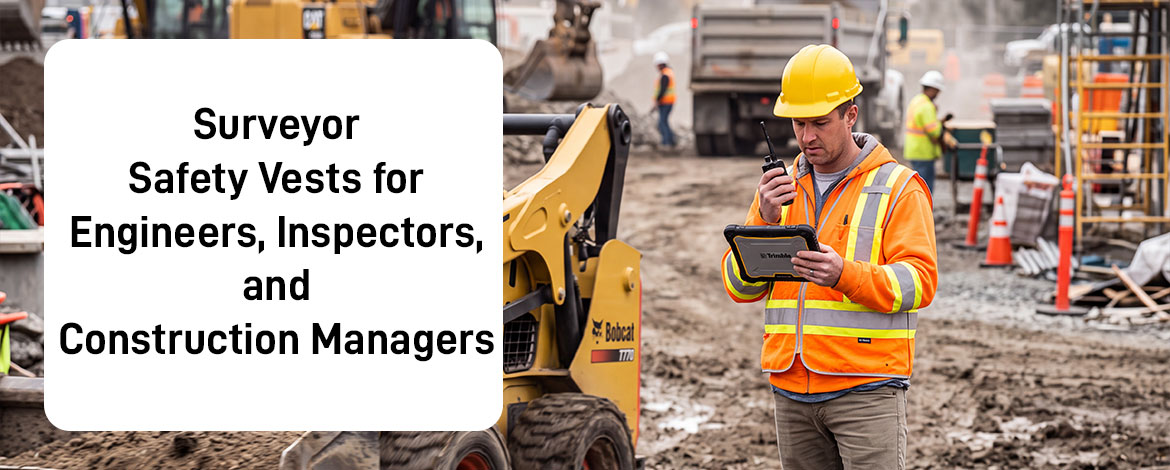
You are standing three feet from a moving skid steer with a tablet in one hand and a radio in the other, and the only thing standing between you and a very bad afternoon is whether the operator sees you first. That is the entire case for a surveyor safety vest in one sentence.
Active job sites move fast. Heavy machinery, trucks backing up, and shifting hazards make visibility a matter of life and death, and surveyors, engineers, and inspectors spend their whole day in the busiest parts of the site while juggling tools, tablets, and paperwork. A surveyor safety vest is built for exactly that combination of exposure and workload.
Key Highlights
- Surveyor vests combine ANSI/ISEA 107 certified high visibility fabric with the pocket layout field professionals actually need, including radio pockets, tablet slots, and rear document pouches
- Most field engineering and inspection work calls for a Class 2 vest, while Class 3 is required near traffic exceeding 50 mph or in low light
- The Federal Highway Administration's 23 CFR Part 634 requires ANSI-compliant high-visibility apparel for workers in the right-of-way of any federal-aid highway, which covers most survey crews and road inspectors
- Storage capacity, fabric weight, and ANSI class should each match your specific role, not a generic "one vest fits all" approach
- Reinforced stitching, heavy-duty zippers, and quality reflective tape determine how long a vest actually lasts in the field
What Is a Surveyor Safety Vest
A standard safety vest typically offers a mesh design and a few basic pockets. A surveyor's safety vest is built differently. It's designed for professionals who need both high visibility and practical storage throughout the workday.
Most surveyor vests include chest pockets for notebooks and pens, an interior radio pocket, a tablet or clipboard pocket, an ID badge holder, and mic tabs for a body camera or two-way radio. Many styles also feature a rear stake pocket or map pouch for larger documents, along with a heavy-duty zipper and reinforced stitching in high-stress areas. Hi Vis Kings covers this in greater detail in The Complete Guide to Surveyor Safety Vests, including the differences between heavy-duty and open road styles.
The result is a vest that supports your workflow instead of getting in the way.
Why Engineers, Inspectors, and Construction Managers Each Need Something Different
Not every professional on the job site has the same responsibilities, so the right surveyor vest depends on your role.
- Civil engineers: Need equipment pockets and an adjustable fit to carry measuring devices, data collectors, and essential tools while staying mobile.
- Construction inspectors: Benefit from easy access to a notepad, phone, and measuring tools, along with high visibility for safer inspections in active work zones.
- Construction managers: Need radio pockets, mic tabs, and tablet or clipboard storage to stay organized while supervising crews and coordinating daily operations.
ANSI and OSHA Requirements You Need to Know
Choosing the right surveyor vest starts with compliance. The ANSI/ISEA 107 standard classifies high-visibility apparel based on the level of protection it provides, with Class 2 and Class 3 being the most common options for field professionals.
|
Feature |
Class 2 Surveyor Vest |
Class 3 Surveyor Vest |
|
Visibility level |
Moderate |
High |
|
Typical use |
Parking lots, building sites, and moderate traffic |
Freeways, high-speed roads, low light conditions |
|
Minimum reflective area |
775 sq. in. |
1,240 sq. in. |
|
Sleeve requirement |
No |
Yes, or additional background material |
|
ANSI/ISEA rating |
ANSI Class 2 |
ANSI Class 3 |
Class 2 is suitable for most surveying, engineering, and inspection work in moderate traffic areas. Class 3 is required for high-speed traffic, highway construction, and low-light conditions where maximum visibility is essential.
Additionally, 23 CFR Part 634 requires workers within the right-of-way of federal-aid highways to wear ANSI Class 2 or Class 3 high-visibility apparel. Choosing the correct class helps improve safety and supports compliance with workplace regulations.
Essential Features to Look for in Surveyor Safety Vests
The right surveyor vest should provide visibility, storage, comfort, and durability to support your workday.
- High visibility fabric: Choose ANSI-compliant fluorescent yellow-green or safety orange with durable retroreflective tape for better visibility in low light.
- Storage: At a minimum, look for two chest pockets, an interior radio pocket, and a rear document or stake pocket. More advanced surveyor vests with pockets add a dedicated tablet pocket, pencil slots, a zippered pocket for valuables, and an ID badge window.
- Comfort: Breathable mesh, an adjustable fit, and lightweight materials help keep you comfortable during long shifts.
- Durability: Reinforced stitching, ripstop fabric, and heavy-duty zippers improve longevity, especially in demanding work environments. A solid fabric vest adds extra structure for rugged, high-abrasion environments.
Matching Your Vest to Your Job Site
The right surveyor vest depends on your work environment and the level of visibility, durability, and storage you need.
- Road construction: Choose a Class 3 vest with maximum reflective coverage for high-traffic areas. The PIP 303-0500M Class 3 Hi Vis Surveyor Vest is a reliable, budget-friendly option.
- Utility work: Look for durable materials with radio pockets and ample tool storage. The GSS 1511-1513 Class 2 Hi Vis Surveyor Safety Vest offers multiple storage pockets for field equipment.
- Land surveying: A lightweight mesh vest improves comfort while carrying essential tools. The GSS 1605 Class 2 Hi Vis Surveyor Safety Vest provides breathable comfort with practical storage.
- Commercial construction: Choose a Class 2 or Class 3 vest with tablet storage, mic tabs, and multiple pockets. The Kishigo S5000-S5001 Class 2 Hi Vis Surveyor Vest and 1823 Ultimate Construction Surveyor Safety Vest are well-suited for supervising crews and managing busy job sites.
Need a fit built for women, or a tall cut for layering over cold weather gear? Check out women's workwear and the full surveyor vest collection for sizing across the board, or use the sizing guide if you are between sizes.
Common Mistakes When Buying Surveyor Safety Vests
Avoid these common mistakes to choose a vest that performs well on the job.
- Choosing price over compliance: Always select an ANSI-compliant vest that meets your work site's visibility requirements.
- Not enough storage: Make sure the vest has enough pockets for your tools, radio, notebook, and other essentials.
- Ignoring the weather: Choose breathable mesh for hot conditions or heavier materials for cooler weather.
- Selecting the wrong ANSI class: Match the vest's visibility rating to your traffic exposure and work environment.
- Choosing the wrong fit: A proper fit improves comfort, mobility, and layering over work clothes.
- Overlooking build quality: Reinforced stitching, durable reflective tape, and heavy-duty zippers help the vest last longer.
Caring for Your Surveyor Safety Vest
- Follow the care label: Wash in cold or warm water on a gentle cycle.
- Avoid harsh cleaners: Skip bleach and strong detergents to protect the fluorescent fabric and reflective tape.
- Inspect after washing: Check for peeling, cracking, or fading reflective tape and repair or replace the vest if needed.
- Store properly: Hang or lay the vest flat in a cool, dry place away from direct sunlight.
- Replace when worn: Replace the vest if the reflective tape, fluorescent color, or fabric is significantly faded, damaged, or torn.
Why Crews Choose Hi Vis Kings
We build our surveyor vest lineup around the people who actually wear it in the field, not around a one-size-fits-all warehouse vest. Every vest we carry meets or exceeds ANSI/ISEA 107 visibility requirements, and our catalog spans both Class 2 and Class 3 options across multiple pocket configurations, so you can match the vest to your actual workflow instead of compromising.
We carry trusted names like Kishigo, known for combining ANSI-compliant safety features with genuinely comfortable, ergonomic design, alongside GSS, PIP, Ergodyne, and Radians. Reinforced stitching, heavy-duty zippers, and high-grade reflective tape run through the entire range, and breathable mesh with an adjustable fit makes full-day wear practical even on the toughest shifts. If you ever need help narrowing down a fit, our team is reachable through contact us or the FAQ page, and we also offer logo customization for crews outfitting a whole team at once.
FAQs
1. What is a surveyor safety vest?
It is a high-visibility garment built for field professionals such as land surveyors, engineers, and inspectors, combining ANSI-compliant fabric and reflective tape with multiple utility pockets for equipment, documents, and communication devices.
2. What makes a surveyor vest different from a standard safety vest?
Surveyor vests add significantly more storage, including radio pockets, tablet pockets, rear document pouches, and pencil slots, plus heavier construction and reinforced stitching. Standard safety vests are built for visibility alone, with minimal storage.
3. Do engineers need a Class 2 or Class 3 surveyor vest?
It depends on your worksite. Class 2 covers most field engineering and inspection work away from high-speed traffic, while Class 3 is required for anything adjacent to roads posted above roughly 50 mph or in low-visibility conditions.
4. Which color is better, yellow-green or orange?
Both are ANSI compliant. Yellow-green tends to perform slightly better in daylight, while orange is more traditional on road construction crews and required in some jurisdictions, so check your local requirements and your employer's policy before choosing.
5. What should a construction manager look for in a vest?
A radio pocket, mic tabs for hands-free communication, a tablet or clipboard pocket, and an ID badge holder, all in a Class 2 or Class 3 vest that layers well in cold weather.
6. Are surveyor safety vests required by OSHA?
OSHA requires ANSI-compliant high-visibility clothing for workers on federal-aid highway projects under 23 CFR Part 634, and many employers extend that requirement across every active site as a best practice. The specific class required depends on traffic speed and site conditions.
7. How many pockets should a professional surveyor's vest have?
Look for at least four to six, including two chest pockets, an interior radio pocket, and a rear stake or document pocket, with a tablet pocket and pencil slots on more advanced configurations.
8. How often should I replace my surveyor safety vest?
Replace it once the reflective tape peels or dulls, the fluorescent color fades noticeably, or the vest sustains structural damage. Many safety programs recommend annual replacement as a baseline regardless of visible wear.
Ready to Gear Up
Your safety on site should not depend on luck or on whether an operator happens to glance your way. It should depend on the gear built for the job you actually do.
Browse the full surveyor safety vest collection at Hi Vis Kings and find the ANSI class, pocket layout, and fit that match your role on site, backed by brands crews have trusted for decades.


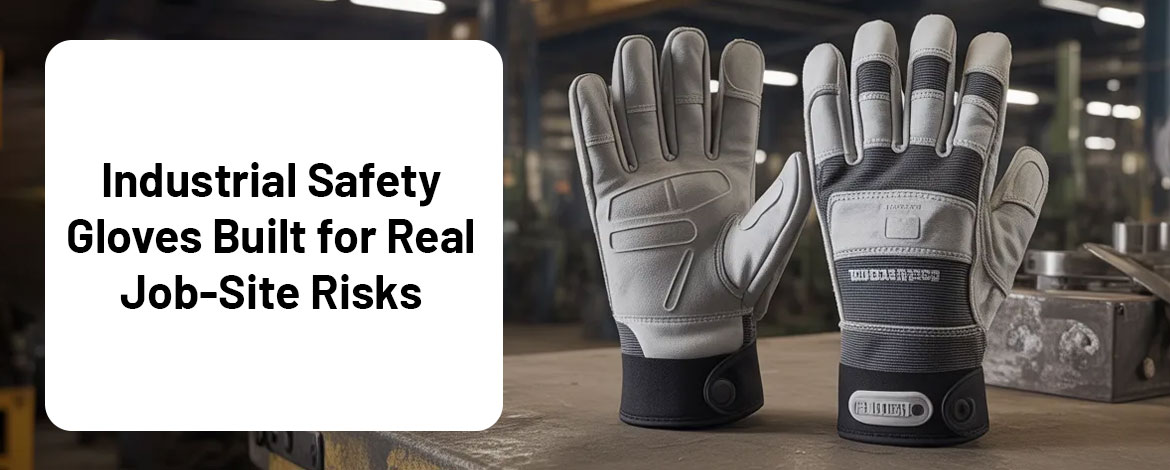
We protect hands where injuries happen fast, and mistakes cost more than time.
- 30 min read
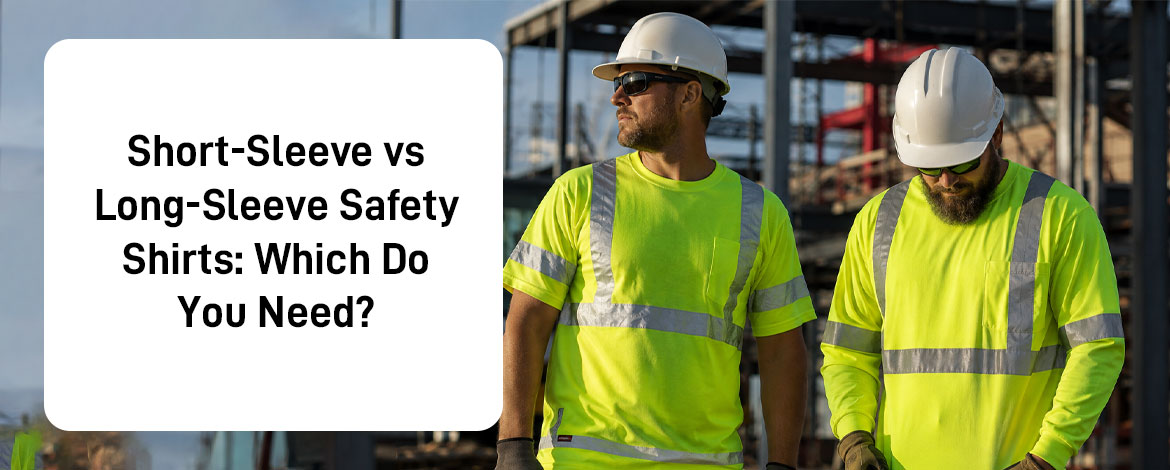
Sleeve length seems like a minor detail on a safety shirt until you're three hours into a shift and your arms are either sunburned or sweating through your shirt.
- 30 min read
You are standing three feet from a moving skid steer with a tablet in one hand and a radio in the other, and the only thing standing between you and a very bad afternoon is whether the operator sees you first.
- 30 min read