



Custom Branded Safety Vests: How to Add Your Logo Without Losing ANSI Compliance
- 30 min read
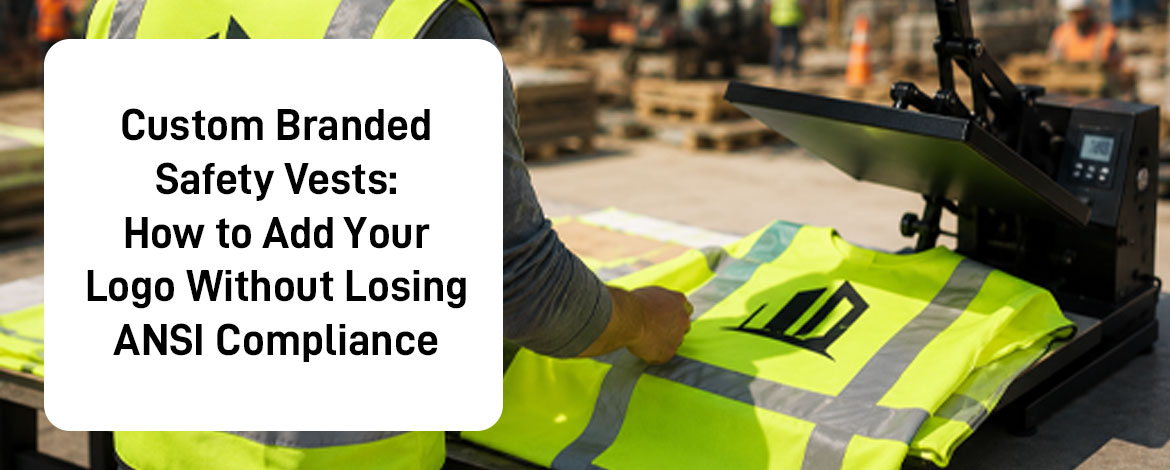
Yes, you can put your logo on an ANSI/ISEA 107-2020 safety vest without losing compliance. Keep the artwork on the background fabric, off the reflective tape, and sized so it doesn't cut into the vest's required reflective coverage. That's the whole rule.
Everything below walks through how to apply it, the printing methods that hold up on hi-vis fabric, and where a logo fits best on the chest, back, or sleeve without creating a problem your safety officer has to catch later.
Key Highlights
- Place your logo only on the background fabric, never over reflective tape.
- Plain printed logos are typically limited to 16 sq. in., with only 4 sq. in. overlapping front reflective stripes.
- Compliant reflective badges can be up to 78 sq. in. without disrupting the reflective striping.
- OSHA mandates high-visibility apparel for flaggers and workers exposed to traffic near excavations.
- Embroidery offers the best durability, while screen printing and heat transfer vinyl are ideal for detailed, full-color logos.
- Incorrect logo placement can lead to costly reprints and non-compliant safety apparel.
What Does ANSI/ISEA 107-2020 Actually Require From Your Vest
Before you send artwork to a decorator, know what the vest actually has to deliver. ANSI/ISEA 107-2020 sorts high visibility garments by Type and Class.
Type tells you where the vest gets worn. Type O covers off-road environments like warehouses and rail yards. Type R covers roadway work exposed to public traffic. Type P covers public safety and emergency response.
Class tells you how much background fabric and reflective tape the garment has to carry. A Class 2 vest needs at least 775 square inches of fluorescent background material and 201 square inches of reflective tape, and it can be sleeveless for traffic under 50 mph. A Class 3 vest adds up to 1,240 square inches of background material and 310 square inches of reflective tape, and it requires sleeves for higher-speed, low-light work.
Your logo lives inside that background material number. The more space a design calls for, the less clean fabric a decorator has to work with once the required tape is placed.
When Does OSHA Require a Class 2 or Class 3 Vest
OSHA doesn't have one single rule that says wear a hi-vis vest. It leans on a few different provisions instead.
The General Duty Clause under Section 5(a)(1) of the OSH Act covers general hazard exposure on a job site. 29 CFR 1926.201(a) covers flaggers directly, and it points to Part 6 of the Manual on Uniform Traffic Control Devices for the specific garment requirements. 29 CFR 1926.651(d) covers workers near an excavation who are exposed to public vehicular traffic.
The MUTCD is what actually sets Class 2 or Class 3 as the floor for most roadway work zones, and it's incorporated into OSHA's rules by reference. Your crew doesn't need to memorize any of this. You do, if you're the one deciding how much customization a vest can carry before it stops doing its job.
What Are the Three Rules for Placing a Logo on a Compliant Vest
Every legitimate source on vest customization agrees on the same three rules.
1. Place the Logo on Background Fabric
Keep logos on the solid background fabric only. Never print or embroider over reflective tape, as it can make the vest non-compliant.
2. Preserve Reflective Coverage
Avoid reducing the vest's required reflective area. A common guideline limits non-reflective logos to 16 sq. in. (with only 4 sq. in. overlapping front stripes), while compliant reflective badges can be up to 78 sq. in. without disrupting the striping pattern. Always verify sizing with your vest supplier.
3. Use Approved Decoration Materials
Choose embroidery, matte ink, or standard heat transfer vinyl for logos. If using reflective lettering or vinyl, ensure it is manufacturer-approved and compliant with the vest's safety standard.
What Happens If You Get Logo Placement Wrong?
Incorrect logo placement can do more than affect the vest's appearance. If a logo covers the required reflective tape or reduces the vest's visible safety features, the vest may no longer meet its Class rating. During an OSHA inspection or a jobsite safety check, that vest could be treated as non-compliant.
The responsibility ultimately falls on the employer, not the print shop. If your crew arrives wearing non-compliant safety vests, it can lead to compliance issues, failed safety inspections, and the need to replace the entire order.
The simplest way to avoid this is to confirm your artwork placement before production. Share the vest's Class rating with your supplier and ask them to verify that the logo won't reduce the required reflective coverage. A quick review upfront can save the cost and hassle of reprinting hundreds of vests later.
If you're planning to customize high-visibility apparel for your team, Hi Vis Kings' Customization Services make it easy to add your company logo with professional screen printing or embroidery while helping maintain the vest's visibility and compliance. Before production, their team can also help confirm the best logo placement for your chosen vest style.
Which Decoration Method Holds Up Best on a Safety Vest
Not every decoration method wears the same way on a safety garment.
|
Method |
Durability |
Breathability Impact |
Best For |
|
Screen Printing |
Good, can crack over years |
Minimal |
Simple one or two color logos, large runs |
|
Heat Transfer Vinyl |
Very good |
Slight, on mesh vests |
Detailed logos, small to mid-size runs |
|
Embroidery |
Excellent, outlasts the vest |
None |
Small logos, high durability jobs |
|
Sublimation |
Excellent |
None |
Full color, photo quality branding |
Embroidery is the most durable option, making it ideal for logos that need to withstand frequent washing and daily wear. Unlike printed designs, it won't peel, crack, or fade over time. However, embroidery is best suited for simple logos, names, or text, as fine details and color gradients are difficult to recreate with thread. For complex, multi-color logos or gradient designs, screen printing or heat transfer delivers a more accurate result.
Where Should You Place a Logo on a Safety Vest?
The best logo location depends on the vest style, logo size, and the amount of background fabric available. Follow these placement guidelines to keep your branding visible without affecting compliance.
Chest
Ideal for company names or small logos.
- 1. Place the logo on the solid background fabric.
- 2. Position it above or below the horizontal reflective tape.
- 3. Never print or embroider over reflective strips.
Back
Best for larger logos and company branding.
- 1. The back panel provides the largest printable area.
- 2. It's the most visible part of the vest on the jobsite and in team photos.
- 3. Make sure the design doesn't interfere with the reflective striping.
Sleeves
Use sleeve branding with caution.
- 1. Class 3 vests rely on sleeve reflective tape to meet visibility requirements.
- 2. Adding a logo can reduce the required reflective coverage.
- 3. If sleeve branding is a priority, consider a Class 2 sleeveless vest, which offers more flexibility.
Vest Style
The vest material also affects your customization options.
- Mesh safety vests have ventilation panels, leaving less solid fabric for larger logos.
- Solid fabric vests provide more uninterrupted space, making them a better choice for large back designs.
Does a Logo Affect Your Vest's Compliance Label
Every compliant vest carries a label showing the manufacturer, the Type and Class, and the standard edition it meets, along with a performance pictogram for the reflective material. You can see the full breakdown of what these labels mean on our ANSI Standards page. Decoration should never cover that label.
Adding a logo should not cover or interfere with the vest's compliance label. Every ANSI-compliant vest includes a label that identifies the manufacturer, the Type and Class, the ANSI/ISEA standard it meets, and the reflective material's performance rating. Keep this label visible and intact after customization.
It's also worth understanding how decoration affects long-term performance. While the ANSI/ISEA 107-2020 standard no longer requires manufacturers to list a maximum wash cycle count on the label, repeated washing and UV exposure will still gradually reduce the brightness of fluorescent fabrics and reflective materials.
Before placing a bulk order, ask your customization provider:
- Has the decoration method been tested for repeated washing?
- Will the logo application affect the vest's reflective performance or durability?
- Does the finished vest still meet its original compliance requirements?
A reputable supplier should be able to answer these questions and confirm that the customization won't compromise the vest's safety or compliance.
FAQs
1. Can you put a company logo on a Class 2 or Class 3 safety vest
Yes. Keep it on the background fabric, off the reflective tape, within a size that doesn't cut into the Class's required reflective coverage.
2. Does adding a logo void ANSI/ISEA 107 compliance
Only if it covers reflective tape, uses reflective material that isn't rated to the standard, or shrinks the garment's certified reflective area below its Class minimum. Done correctly, branding does not affect compliance.
3. What's the maximum logo size on a safety vest
There's no single number written into the US standard itself. It depends on how much background fabric a specific vest style has left after its required tape coverage. A commonly used rule of thumb caps a plain logo around 16 square inches, but confirm the real safe zone with your vest supplier before finalizing artwork.
4. Can the logo itself be reflective?
It's best avoided for full color logos. Reflective or glossy print material can interfere with the vest's photometric testing, even when it's placed on background fabric. Reflective lettering made from a tested, rated material is a different story.
5. Does a compliant vest still carry its label after decoration?
Yes, always. A decorator suggesting the label be removed or covered to clean up the look should be turned down.
6. Do smaller crews get access to custom branding, or is it bulk only
Minimums vary by decoration method, and embroidery setups are often lower than screen printing. Reach out through our customization page for the specific minimum on the vest style you're considering.
Get Your Crew Branded and Compliant
A branded vest does two jobs at once. It keeps your people visible, and it makes it obvious at a glance who's on the crew. Neither job works if compliance gets compromised to make room for the logo.
We build custom Class 2 and Class 3 vests with the reflective coverage locked in first and the branding fitted around it second. Browse our Class 2 vests or Class 3 vests to see how much logo space a given style has to work with, or start a bulk order through our customization page.
Related reading


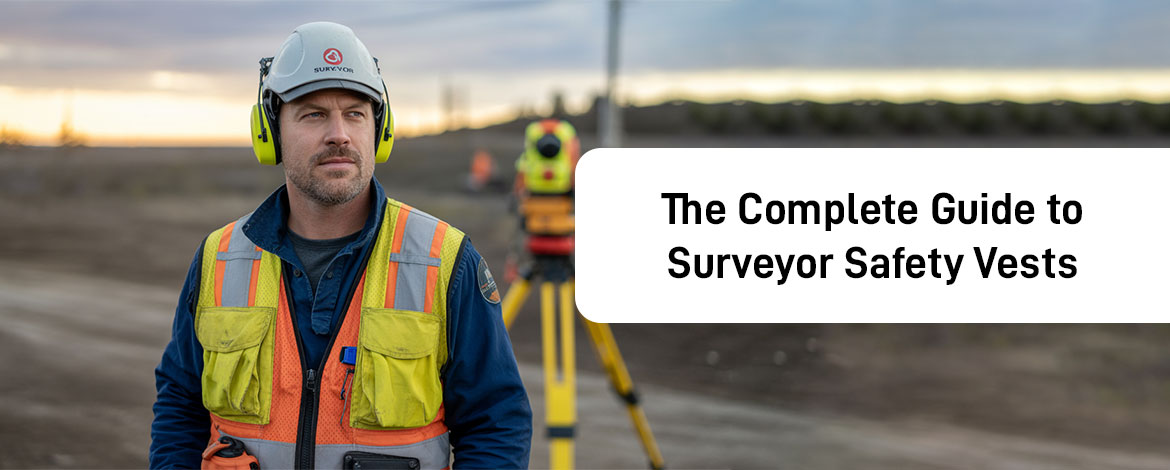
In the demanding world of land surveying, safety and visibility are non-negotiable.
- 10 min read
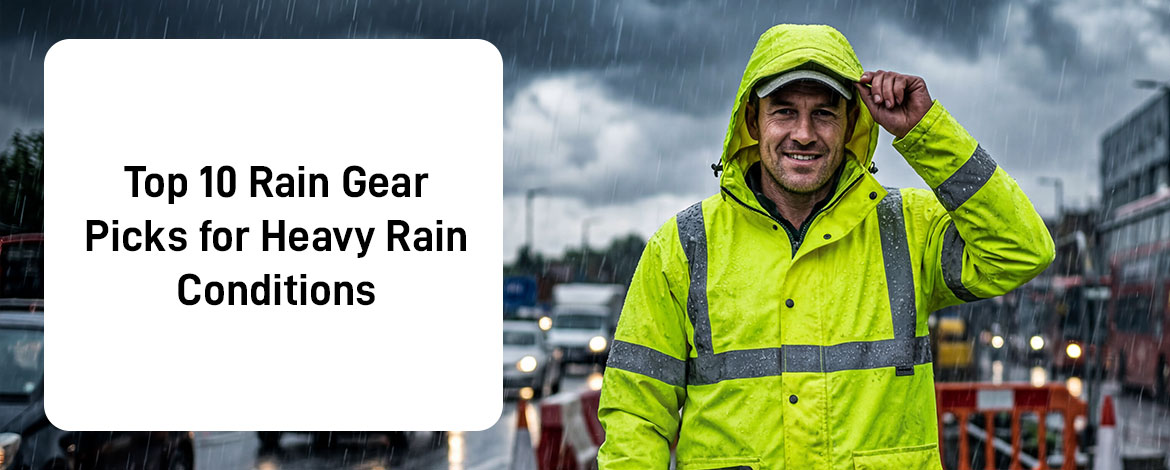
When heavy rain strikes, ordinary rainwear simply isn’t enough.
- 30 min read
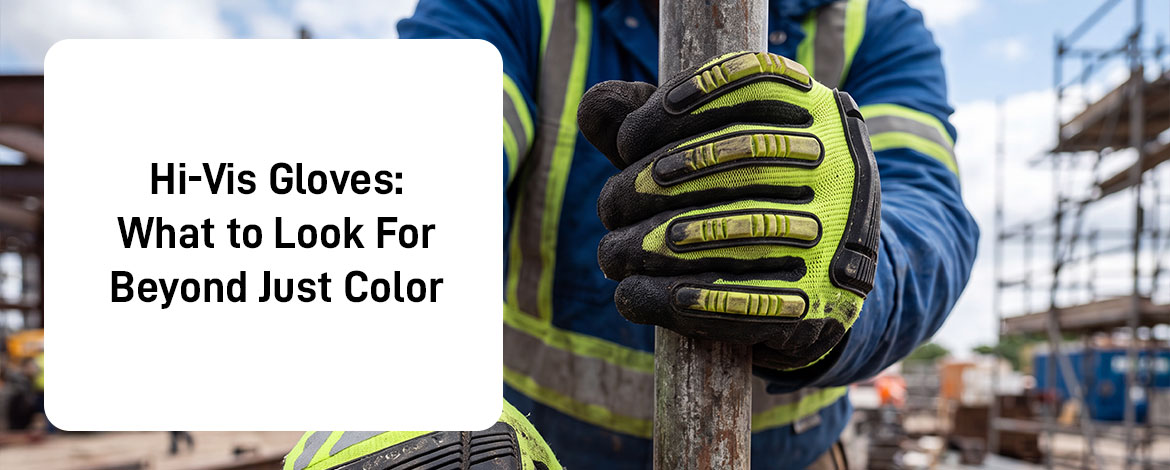
High-visibility gloves get noticed for the obvious reason: their color.
- 30 min read
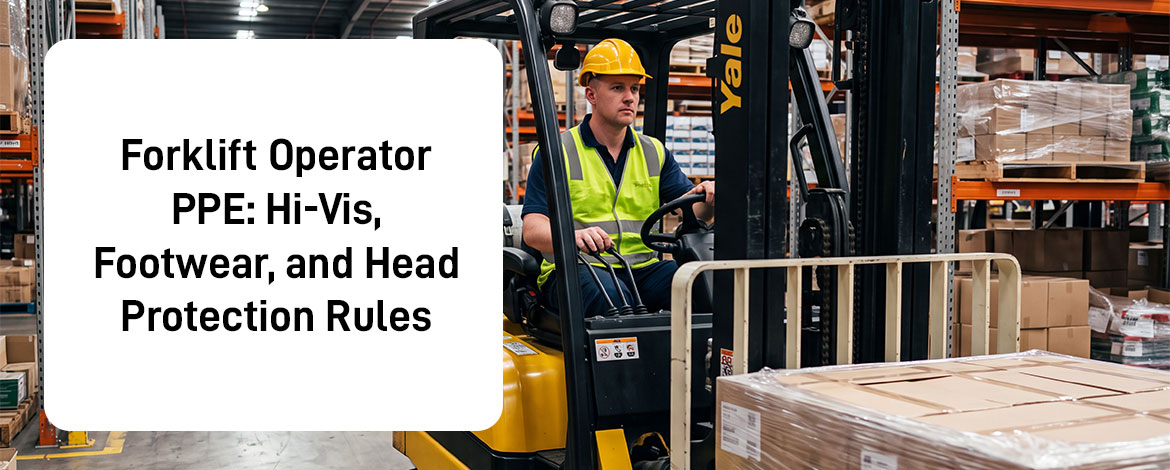
Forklifts are involved in several serious workplace injuries in the US every year, and a large share of them are struck-by incidents.
- 30 min read