



7 Common Hand Injuries At Work And The Gloves That Stop Them
- 30 min read
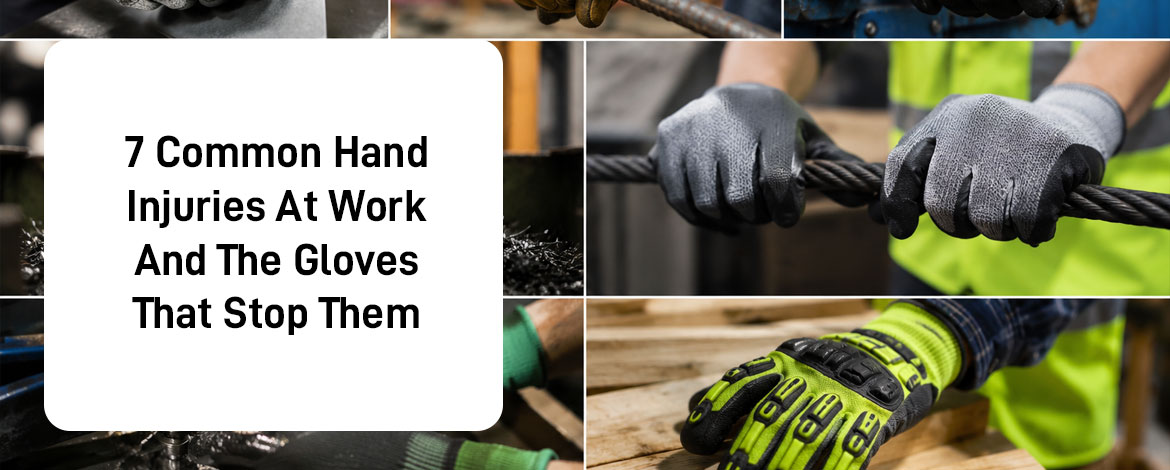
Your hands do more physical work than almost any other part of your body on the job, and it shows in the injury data. We looked at the hazards that send workers home early, and nearly all of them share one thing in common. The right glove would have prevented the injury, or at least cut the damage down to something you could shake off by lunch.
Below, we walk through seven hand injuries that show up again and again across construction, manufacturing, warehousing, and utility work, what causes each one, and the glove built specifically to stop it.
Why Hand Injuries Happen So Often
Your hands are exposed to multiple hazards on nearly every job site, including sharp edges, moving machinery, hot surfaces, corrosive chemicals, vibration, and repeated impact. Under OSHA 29 CFR 1910.138, employers must assess hand hazards and provide gloves that match the specific task and exposure.
OSHA's hierarchy of controls places gloves as the last line of defense, after eliminating hazards, implementing engineering controls, and using administrative measures such as training and job rotation. Even so, gloves are often the only barrier between your hands and an injury, making proper selection essential.
A common safety mistake isn't failing to wear gloves—it's wearing the wrong ones. A cut-resistant glove won't protect against chemicals, and an insulated winter glove may offer little impact protection. Choosing gloves that match the actual hazard is critical to keeping workers safe.
What A Hand Injury Actually Costs
Hand injuries aren't just painful. They're expensive. According to National Safety Council analysis of NCCI workers' compensation claims data, the average lost time claim across all causes was $47,316 for claims occurring in 2022 and 2023. Hand specific injuries varied widely by severity:
- Fractures, crushes, or dislocations averaged $66,467 per claim
- Burns averaged $64,019 per claim
- Amputations averaged $125,058 per claim, the highest cost among the injury types tracked
Those figures don't include the indirect costs. Lost productivity, retraining, overtime for coworkers covering the gap, and potential OSHA citations if hand protection wasn't provided or wasn't matched to the hazard all add up on top of the claim itself. A glove upgrade that costs a few dollars more per pair is, in almost every case, cheaper than a single claim.
1. Cuts And Lacerations
Sharp metal edges, glass, blades, box cutters, and sheet metal cause some of the most common hand injuries in construction, manufacturing, warehousing, and glass handling. Cut-resistant gloves are rated on the ANSI/ISEA cut scale from A1 to A9, with higher letters indicating stronger resistance to slicing forces.
A quick way to think about the scale:
|
ANSI Cut Level |
Typical Use Case |
|---|---|
|
A1 to A3 |
Light duty tasks, small parts handling, thin metal sheets |
|
A4 to A6 |
Moderate risk work like glass handling, sheet metal work, general fabrication |
|
A7 to A9 |
Severe hazards such as exposed blades, heavy machinery, razor sharp materials |
Materials like HPPE fibers and Kevlar are woven into the glove shell to provide cut resistance without sacrificing too much flexibility. Our gloves collection includes several ANSI-rated cut-resistant options, including the Mechanix Wear Original CR5, built with an ANSI A5-rated liner and a synthetic leather palm for grip and durability, and the Armor Guys Kyorene 00-840HV, an ANSI A4-rated glove that pairs graphene technology with a nitrile palm coating for grip in wet or dry conditions.
2. Punctures
Nails, splinters, staples, and sharp debris cause puncture wounds that can look minor on the surface but lead to infection, nerve damage, or tendon injury if left untreated. Framing, roofing, demolition, and waste handling all carry constant puncture risk.
Puncture-resistant gloves use dense, reinforced palm materials, often layered with the same high-performance fibers used in cut-resistant designs, to keep sharp points from penetrating through to skin. Reinforced palm work gloves like the Armor Guys ExtraFlex 04-1415 combine high dexterity with added cut and puncture protection, which makes them a solid pick for general construction work where a stray nail or exposed screw is never far away.
3. Crush And Impact Injuries
Dropped tools, pinch points, rolling equipment, and heavy materials cause crush and impact injuries ranging from deep bruising to broken bones. These injuries are especially common in oil and gas, mining, heavy equipment operation, and any job where your hands work near moving parts or falling loads.
Impact-resistant gloves solve this with thermoplastic rubber padding built into the knuckles, fingers, and back of the hand. That padding absorbs and disperses blunt force before it reaches bone, which is why impact protection is often layered on top of cut resistance in gloves built for industrial and utility work. Our cut-resistant and impact-resistant gloves combine reinforced palm padding with TPR knuckle guards for exactly this kind of dual hazard.
4. Abrasions
Repetitive contact with rough surfaces like concrete, brick, rebar, and sheet metal wears down skin over time and causes painful abrasions, especially on the palms and fingertips. This is one of the most common low-severity, high-frequency injuries on a job site, since it rarely stops work but adds up over a shift or a season.
Coated palm gloves in nitrile, latex, or polyurethane dip add a durable barrier between skin and surface while preserving grip and dexterity. The Armor Guys ExtraFlex 04-001 nitrile-coated glove is built for exactly this kind of constant contact rather than a single dramatic hazard, which makes dipped palm gloves a staple on material handling, landscaping, and general labor sites.
5. Burns Thermal And Chemical
Hot surfaces, welding sparks, exhaust components, and corrosive chemicals all pose burn risks that a standard cut-resistant or impact glove doesn't address. Thermal and chemical protection require different materials entirely.
Thermal protection typically comes from flame-resistant materials or heat-rated linings that can withstand direct contact or radiant heat. Chemical protection relies on coatings like nitrile, neoprene, or butyl rubber, rated for the specific substances involved. A glove that resists solvents may not resist acids, so matching the coating to the actual chemical listed on the safety data sheet matters more than the glove's cut rating.
Our FR clothing line pairs well with FR rated gloves for workers moving between flame-resistant apparel requirements and hands-on tasks near heat sources, such as welding, electrical work, or oil and gas operations.
6. Fractures And Amputations
The most severe hand injuries, fractures and amputations, usually involve machinery such as presses, conveyors, power tools, augers, or rotating equipment. These are also the most expensive claims by a wide margin, averaging $125,058 per claim according to NCCI data.
Gloves are only one layer of protection here. OSHA's hierarchy of controls calls for machine guarding, lockout and tagout procedures, and point of operation guards first, with impact-resistant and cut-resistant gloves serving as a last line of defense for whatever residual hazard remains after engineering controls are in place. Loose-fitting gloves near rotating equipment can actually increase amputation risk by getting caught in machinery, which is why fit matters as much as material for this category. Our sizing guide can help you match sizes consistently across a crew.
7. Cold-Related Injuries
Extended exposure to freezing temperatures reduces circulation, dexterity, and sensation in the hands, increasing the risk of frostbite and secondary injuries caused by numbness. A numb hand can't feel a cut, burn, or pinch happening in real time. Roadwork, agriculture, utility line work, and outdoor construction in winter months all carry this risk.
Insulated winter gloves with waterproof or water-resistant shells and thermal linings keep your hands warm and functional in cold conditions. The Cordova Monarch Sub-Zero 3740 pairs ANSI A5 cut resistance with insulated, coated construction for crews who need cold weather protection and blade resistance in the same glove. Many crews keep both lightweight gloves for warm months and insulated winter gloves on hand and rotate based on season, since a glove built for July heat won't hold up in January cold, and vice versa.
How To Choose The Right Gloves For Your Job
Before buying gloves for a crew, walk through a short hazard assessment.
- What's the primary hazard? Cuts, punctures, impact, chemicals, heat, or cold. Most gloves are optimized for one or two of these, not all of them at once.
What ANSI/ISEA or ASTM rating do you need? Check our ANSI standards and ASTM standards pages for the ratings relevant to your industry and task.
- How much dexterity is required? Higher levels of protection sometimes trade off fine motor control. Test gloves on the actual task, not just on paper specs, since a glove that's technically rated correctly but too bulky for the job often ends up sitting in a truck instead of on a hand.
What's the fit? A glove that's too loose can get caught in machinery. One that's too tight restricts blood flow and increases fatigue over a shift. Our sizing guide can help match sizes consistently across a crew.
- How often will they be replaced? Cut-resistant and impact gloves lose effectiveness as fibers wear down, even without a visible hole. Build glove replacement into routine PPE inspections rather than waiting for visible damage.
FAQs
1. How often should work gloves be replaced?
Replace gloves as soon as you see thinning material, exposed stitching, or loss of grip. For high use cut resistant or impact gloves, that's often every few months on a busy site, even without an obvious tear.
2. Is a higher ANSI cut level always better?
Not necessarily. Higher cut levels can mean thicker, less flexible gloves. The right level is the lowest one that fully covers the hazard while still letting you do the task comfortably. Over-specifying can hurt compliance if workers find the gloves too cumbersome to wear consistently.
3. Can one glove protect against multiple hazards?
Some gloves combine ratings, such as cut resistance plus a nitrile coating for oil and grip, or cut resistance plus impact padding. No single glove covers every hazard type equally well, so it's worth confirming which specific risks a multi-hazard glove is actually rated for before you buy.
4. Do gloves fully satisfy OSHA hand protection requirements?
Gloves are part of the requirement, not the whole of it. OSHA 1910.138 requires a documented hazard assessment and selection process, not just handing out a box of generic gloves.
Gear Up Before The Next Shift
Most hand injuries at work are preventable with the right glove for the specific hazard on site, not just any pair of gloves. Matching cut resistance, impact protection, chemical resistance, or insulation to the actual risk is what turns PPE from a checkbox into real protection, and it costs a lot less than the alternative.
Browse our full gloves selection for ANSI-rated options built for cuts, impact, chemicals, and cold weather work, or reach out to our team if you need help matching gloves to your crew's specific hazards.
Related Reading


Sleeve length seems like a minor detail on a safety shirt until you're three hours into a shift and your arms are either sunburned or sweating through your shirt.
- 30 min read