



How to Stop a Hi-Vis Jacket From Overheating You Indoors
- 30 min read
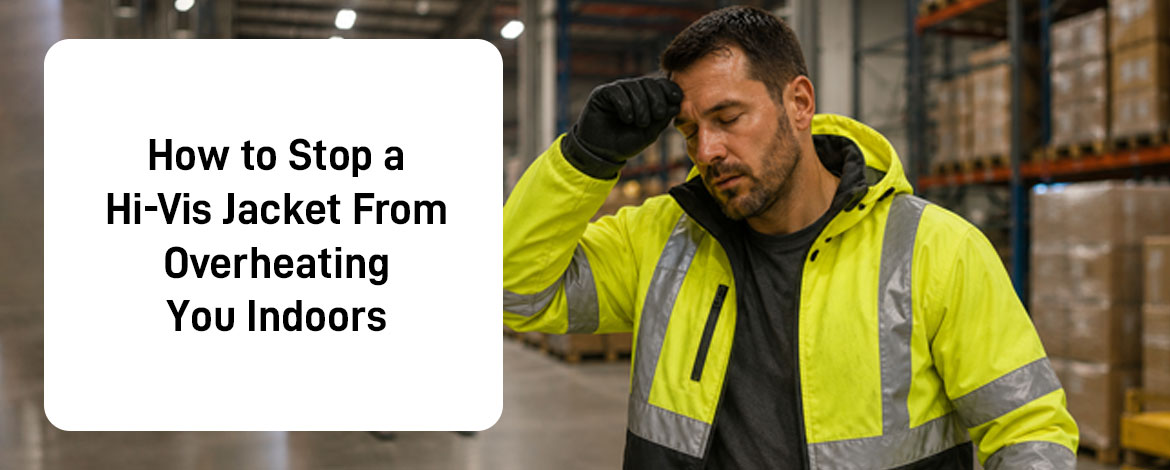
You step through the warehouse doors, and within minutes your hi-vis jacket feels like a sauna. That's not a defect. Most winter safety jackets are built to fight outdoor wind and cold, and every feature that keeps you warm outside works against you the moment you're standing under a roof.
Key Highlights
- Winter hi-vis jackets trap heat because they're built for outdoor wind and cold, not indoor warmth.
- Under ANSI/ISEA 107, a sleeveless Class 2 vest paired with Class E pants can add up to Class 3-equivalent coverage, no jacket required.
- Pit zips, mesh panels, and convertible zip-off sleeves cut overheating without dropping compliance.
- Layering in three thin pieces beats one thick layer for controlling body heat through the day.
- OSHA's April 2026 update to its heat-related National Emphasis Program covers indoor heat exposure too, not only outdoor summer heat.
Why Insulated Hi-Vis Jackets Overheat You Indoors
A winter safety jacket solves one problem, keeping you warm and dry outside, often in wind and wet weather. That means a waterproof or PU-coated shell, a fleece or Thinsulate liner, and a snug cuff and collar that seal heat in.
Every one of those features works against you the second you walk indoors. A sealed shell with no airflow path doesn't know the difference between a windy roadway and a heated warehouse; it just keeps trapping heat either way. Add a thermal liner you can't remove mid-shift, and you're stuck sweating through the jacket or unzipping it enough to lose some of its visibility coverage.
Do You Actually Need the Jacket Right Now
Before you look at jacket features, check the requirement itself. A single garment needs sleeves to count as Class 3 on its own. But the ANSI/ISEA 107 standard also allows an ensemble approach. A sleeveless Class 2 vest paired with Class E hi-vis pants adds up to full Class 3-equivalent coverage, with no jacket involved at all.
That matters here because “Class 3 required” doesn't automatically mean “wear the heavy jacket.” If the actual hazard is visibility and not cold, a mesh Class 2 vest worn with Class E pants gets you the same compliance with a fraction of the heat retention. The jacket earns its place only when the job genuinely calls for wind or cold protection, not just visibility.
Not every square foot of a facility carries the same requirement, either. A loading dock with active forklift and truck traffic calls for full coverage; the break room ten feet away usually doesn't. Check the site's PPE zone map, or ask whoever manages it, before you assume the jacket needs to stay zipped for an entire shift.
Jacket Features That Actually Cut Overheating
When the jacket is genuinely needed, the feature list, not the fabric weight, determines whether you can wear it indoors without cooking.
|
Feature |
What It Solves |
Trade-Off |
|
Pit zips (underarm vents) |
Fast heat dump without removing the jacket |
None significant |
|
Mesh side or back panels |
Continuous airflow |
Slightly less wind protection |
|
Breathable waterproof membrane |
Lets sweat vapor out, keeps rain out |
Higher cost than plain PU coating |
|
Convertible zip-off sleeves |
Jacket becomes a vest in seconds |
Slightly bulkier at the shoulder seam |
The convertible option deserves its own mention. A jacket built as a 4-in-1, worn as a full parka, a shell alone, a liner alone, or with the sleeves zipped off as a standalone vest, solves the indoor and outdoor problem by turning one garment into whichever configuration the moment calls for, instead of asking you to carry a second vest in your truck. Our Class 3 convertible jacket is built around exactly this kind of flexibility, with the liner zipping in for a full parka or out for a lightweight fleece, and the sleeves zipping off to leave a quilted vest.
Layering the Right Way
Instead of relying on one bulky layer, use a three-layer system to stay comfortable and compliant throughout the day:
- Base layer: A moisture-wicking shirt keeps sweat away from your skin.
- Mid layer: A lightweight insulating layer provides warmth without adding excessive bulk.
- Outer layer: Wear your ANSI-compliant hi-vis jacket or vest as the outermost layer to maintain visibility.
This approach makes it easy to adjust to changing temperatures by adding or removing a single layer without taking off your high-visibility outerwear.
A common mistake is wearing a heavy layer underneath the hi-vis jacket, then removing the jacket when you get too warm. While it may feel more comfortable, it also removes your required high-visibility protection at the very time you need it most.
The Hidden Risk of Sweating Through Your PPE
Staying warm isn't just about adding layers; it's also about staying dry. If you sweat through your base layer while working in a heated indoor space and then step outside into cold weather, the damp clothing can cool your body much faster, increasing the risk of cold stress.
To avoid this, wear a moisture-wicking base layer that helps move sweat away from your skin. This keeps you more comfortable and reduces the chance of becoming chilled when temperatures change.
It's also important to remember that heat stress isn't limited to hot outdoor job sites. Workers can overheat in warehouses, manufacturing facilities, and other indoor environments without climate control, especially when wearing PPE. OSHA's National Emphasis Program (NEP) on heat-related hazards covers both indoor and outdoor workplaces, highlighting the importance of managing heat exposure wherever the job takes place.
FAQ
1. Why does my hi-vis jacket make me overheat indoors?
Most winter safety jackets are built for outdoor cold and wind, with sealed shells and liners that trap heat just as effectively indoors, where there's no wind or cold to offset it.
2. Can I wear a vest instead of a jacket and stay compliant?
Often, yes. A sleeveless Class 2 vest paired with Class E hi-vis pants can add up to Class 3-equivalent coverage without a jacket, as long as the job's actual hazard is visibility rather than cold or wind.
3. What jacket features help the most with overheating?
Pit zips and mesh panels for active airflow, a breathable waterproof membrane if rain protection is also needed, and convertible zip-off sleeves for switching between jacket and vest through the day.
4. Do convertible hi-vis jackets actually work?
Yes. A 4-in-1 style that zips down to a vest solves the indoor and outdoor problem directly, since the same garment adapts instead of requiring a second piece of gear.
5. Does taking my jacket off indoors put me out of compliance?
Only if the area still requires it. Most facilities mandate hi-vis in specific zones, near vehicle traffic, active machinery, and loading docks, not throughout the entire building. Check the site's PPE zone requirements rather than assuming head-to-toe coverage everywhere.
6. Is overheating in PPE a real safety concern, or just discomfort?
Both. It's uncomfortable in the moment, and it can leave you sweating through clothing that then cools you too fast outdoors. Indoor heat exposure is also an active OSHA enforcement area, not just an outdoor summer issue.
Get Hi-Vis Gear Built for Both Zones
The right hi-vis gear isn't always the warmest option—it's the one that matches your work environment. Depending on the conditions, you may need a lightweight safety vest, a soft shell jacket, or a convertible layering system that adapts as temperatures change.
Browse our Class 3 soft shell jackets, check out the Ergodyne 4-in-1 convertible jacket, or pair a mesh Class 2 vest with Class E pants if the jacket isn't earning its place today. Contact Hi Vis Kings, and we'll help you match gear to the actual hazard, not just the season.


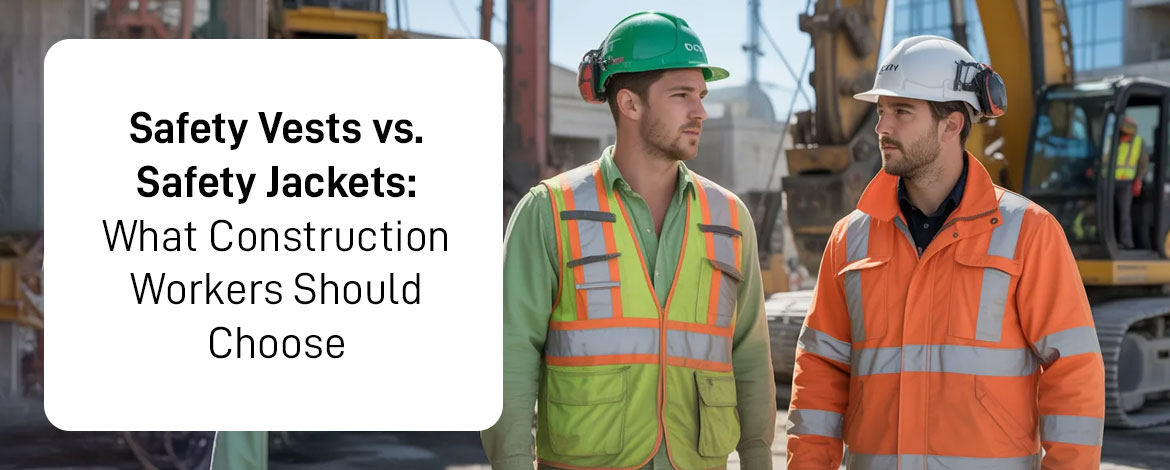
Construction sites are fast-paced, high-risk environments where visibility can mean the difference between safety and serious injury.
- 30 min read
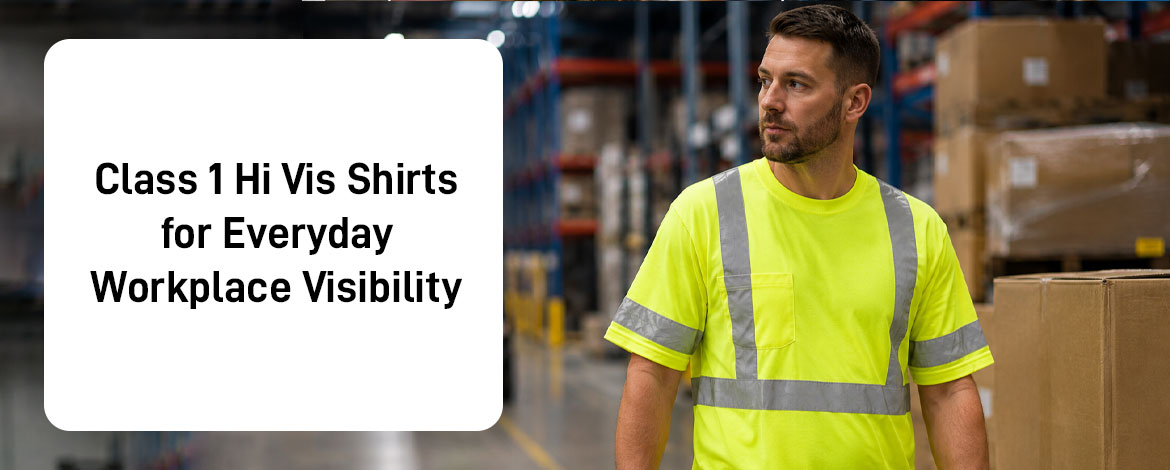
Bright fabric alone does not make a shirt safe. It has to meet a standard, fit the job, and hold up to a full shift of work.
- 30 min read
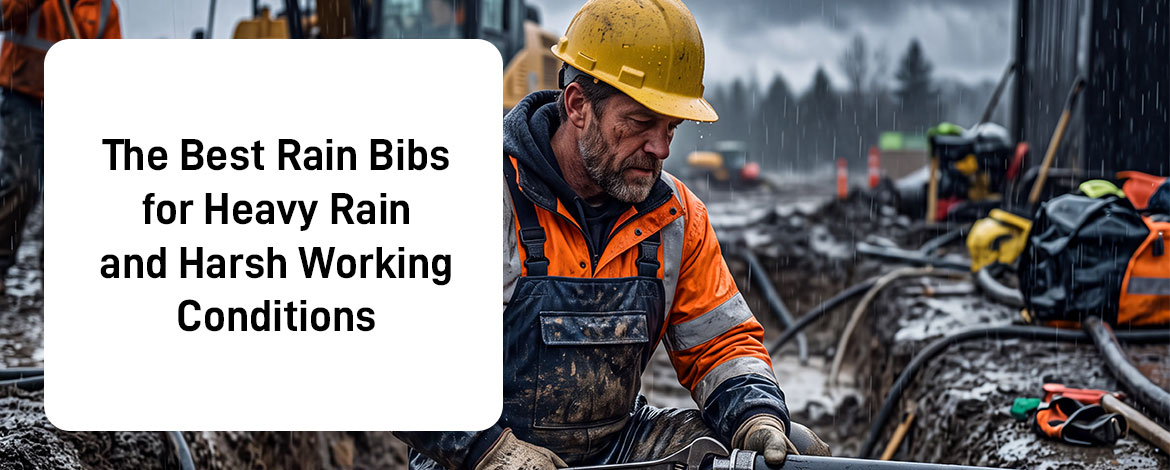
Rain does not stop a jobsite, and gear that leaves a gap at the waist does not stop the rain.
- 30 min read
Employees working in high-risk environments, from construction sites to busy roadways, are exposed to countless daily hazards.
- 10 min read