



How ANSI Class E Safety Pants Pair With Hi Vis Tops for Full Compliance
- 30 min read
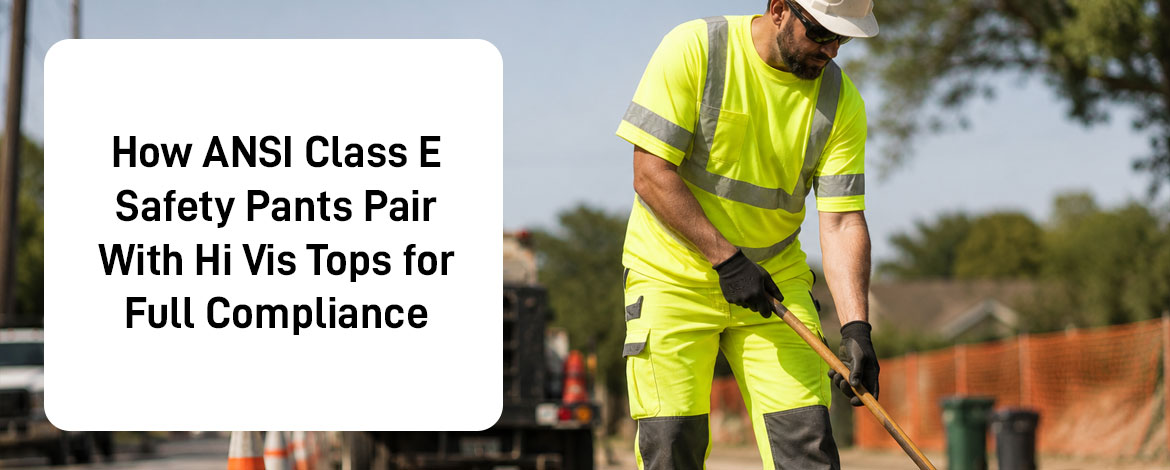
You clip on a bright yellow vest, catch your reflection in the truck window, and figure you're covered for the day. Vest on, box checked. Except that is not how ANSI/ISEA 107 works for every job site, and the piece most crews skip over is the pants.
That is where Class E comes in.
What ANSI Class E Actually Means?
Unlike Class 1, 2, and 3, Class E is not a standalone visibility rating. It is a supplemental designation that applies to lower body garments only, meaning pants, shorts, bib overalls, and gaiters. A pair of Class E safety pants, worn by itself, does not satisfy ANSI/ISEA 107 compliance on a job site that requires it.
That catches a lot of buyers off guard. The pants have reflective tape, they are the right hi vis color, and they look compliant hanging on the rack. But Class E was designed to work as part of a larger system, never as a solo garment.
How Class E Pants Complete a Class 3 Ensemble
Pair Class E pants with a Class 2 or Class 3 top, whether that is a shirt, vest, or jacket, and together they form what the standard calls a Class 3 ensemble. The legs get the reflective coverage a torso only garment cannot provide, and the combination reaches the highest visibility tier that ANSI/ISEA 107 defines.
This matters most for workers exposed to traffic from every direction, not only from the front. Reflective striping around the legs helps drivers register a full human shape at a distance, especially at night or in bad weather, something a vest alone cannot do. Struck by incidents remain one of the leading causes of nonfatal injury in construction. NIOSH data tied roughly 150 deaths and 14,000 nonfatal injuries in 2020 to struck by incidents on construction sites, totaling around $1.4 billion in workers compensation costs. Full leg visibility is one of the more affordable ways a crew can push back on that number.
Class 2 vs Class 3 vs Class E at a Glance
|
Class |
Coverage |
Worn Alone |
Typical Use |
|
Class 2 |
Torso, moderate background material |
Yes, compliant on its own |
Moderate risk roadway work, warehouse floors |
|
Class 3 |
Torso plus arms and legs, maximum background material |
Yes, compliant on its own |
High speed roadway, low light conditions |
|
Class E |
Legs only, pants, shorts, or bibs |
No, supplemental only |
Combined with a Class 2 or 3 top for a full ensemble |
Who Needs a Full Class 3 Ensemble on the Job
Not every job site requires Class E pants. But for crews exposed to high speed traffic, federally funded roadway projects, or nighttime work with limited visibility, a full Class 3 ensemble, meaning a compliant top plus a Class E bottom, is often the baseline expectation rather than an upgrade.
Roles where this comes up most often include:
- 1. Road construction and highway maintenance crews
- 2. Flaggers and traffic control workers
- 3. Utility and line crews working roadside, often layered under a safety sweatshirt or insulated jacket in cold months
- 4. Emergency responders operating near live traffic, frequently paired with FR safety vests or FR outerwear
The Compliance Mistakes We See Most Often
Buying Class E Pants and Stopping There
It happens more than you would think. A safety manager restocks pants, sees ANSI Class E on the label, and assumes the box is checked. It is not until there is a compliant Class 2 or Class 3 top in the mix as well.
Treating a Class 3 Jacket as Automatically Sufficient
The reverse mistake shows up just as often. Crews wear a solid Class 3 jacket and treat that as the whole answer, without realizing a jacket alone, without Class E pants, may fall short of a job site's full body visibility requirement if the site specifically calls for leg coverage.
What to Look for Before You Buy Class E Pants
Not all Class E pants are built the same. A few details worth checking before you order in bulk:
- Reflective tape placement. Look for tape that wraps the shins and ankles rather than a single stripe, so drivers can register a full human shape from any angle.
- Fabric for the season. Breathable mesh Class E pants keep crews cool in summer heat, while insulated or fleece lined options make more sense for winter roadwork.
- Weather protection. Waterproof rain pants and bibs with sealed seams keep a crew dry and visible in storms without sacrificing the reflective coverage a job site needs.
- Fit over other gear. Class E pants are often worn as an outer layer over regular work pants or base layers. Elastic waistbands, side snaps, and zippered leg openings make it easier to pull them on over boots without undressing first.
- Sizing that actually fits your crew. Between king size options, tailored fits through our women's workwear line, and a full sizing guide, getting the fit right the first time saves you a round of returns.
Building a Compliant Outfit for Your Crew
A few pairings that hold up in practice:
|
Job Site Scenario |
Compliant Pairing |
|
Warm weather roadway crew |
Class 2 T-shirt with mesh Class E pants |
|
Cold weather highway maintenance |
Insulated Class E pants with a Class 3 soft shell jacket |
|
Arc flash risk on utility sites |
Class 3 FR jacket with FR rated Class E pants where available |
The goal is matching the top and bottom classes so the combination actually meets what the job site requires, not just grabbing whichever pieces look brightest. If your crew works in flame or arc flash conditions, run through our FR clothing and FR jackets lines alongside your Class E pants to keep the whole ensemble rated for the hazard, not just the visibility requirement.
For a broader look at which roles typically need full body coverage on a job site, our post on industries that require employees to wear safety vests breaks down risk levels by sector.
FAQs
1. Are Class E pants ANSI compliant on their own?
No. Class E is a supplemental designation for lower body garments and only counts toward compliance when paired with a Class 2 or Class 3 top.
2. If I already wear a Class 3 jacket, do I need Class E pants too?
It depends on the job site's requirements. A Class 3 jacket is compliant as a standalone garment, but if the site calls for full body coverage, or the work involves exposure from multiple traffic directions, Class E pants add leg level visibility the jacket does not cover.
3. Can Class E pants be worn with a non-ANSI shirt?
No. Pairing Class E pants with a shirt that is not ANSI rated does not create a compliant ensemble. Both pieces need to meet their respective standards.
4. Do Class E pants come in different weights for different seasons?
Yes. Options range from lightweight mesh pants for hot weather to insulated, fleece lined, or waterproof rain gear for cold and wet conditions.
Complete Your Ensemble at Hi Vis Kings
A vest by itself tells a driver you are somewhere nearby. A full Class 3 ensemble, top and Class E bottom working together, tells them exactly where your legs are too, even in the dark, even in the rain.
Browse our full range of Hi Vis safety pants and pair them with a compliant Class 2 or Class 3 top to keep your crew visible and covered on every job site. Check our ANSI Standards resource if you want the full breakdown before you order, or reach out to our team and we will help you match the right classes for your worksite.


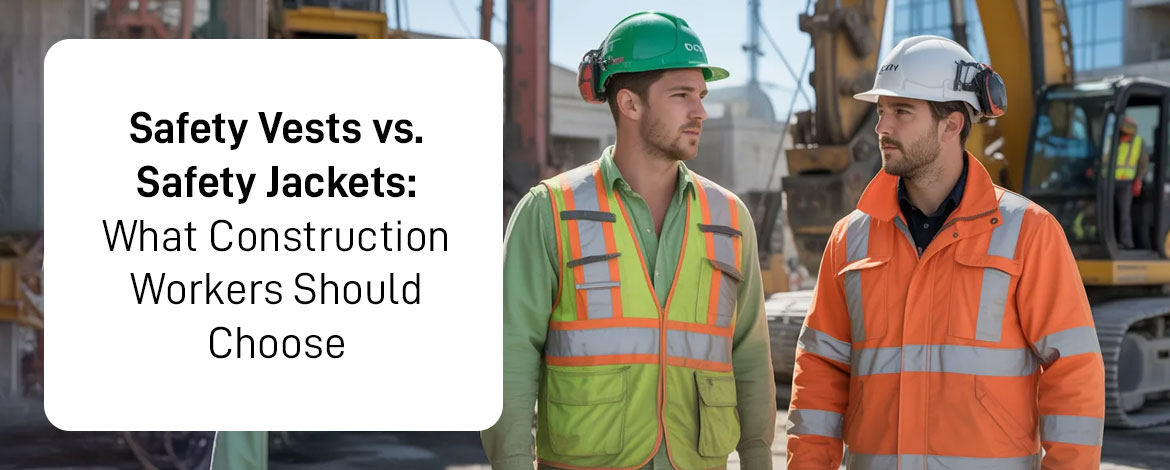
Construction sites are fast-paced, high-risk environments where visibility can mean the difference between safety and serious injury.
- 30 min read
You clip on a bright yellow vest, catch your reflection in the truck window, and figure you're covered for the day.
- 30 min read