



Class 3 FR Jackets Explained: What Each Rating Covers
- 30 min read
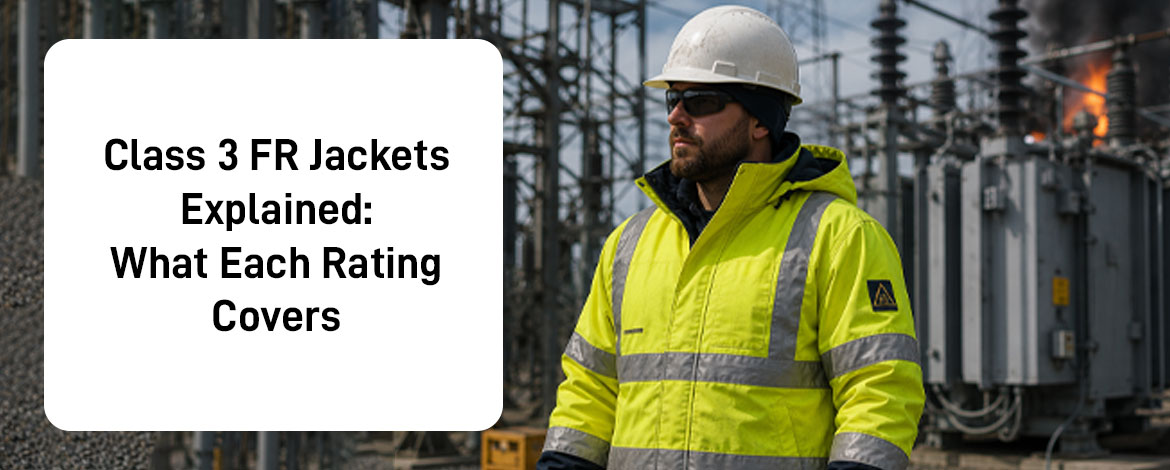
Search “Class 3 FR jacket” and the name alone is doing two jobs at once. Class 3 and FR are separate safety ratings that happen to land on the same label, and mixing them up is the easiest way to walk onto a job site with a jacket that doesn’t protect against the hazard you’re actually facing. Class 3 is a visibility rating. FR is a flame or arc resistance rating. Neither one tells you anything about the other. Here’s what each rating covers and how to tell if your crew needs both.
Key Highlights
- Class 3 is a visibility rating under ANSI/ISEA 107. It has nothing to do with fire or arc protection.
- FR (flame resistant) covers two different hazards depending on the standard: NFPA 2112 for flash fire and NFPA 70E for electric arc.
- A jacket only needs both ratings when a worker faces both hazards on the same shift, most often utility linemen, oil and gas crews near roadways, and highway maintenance workers.
- OSHA 1910.269 requires flame-resistant or arc-rated outer clothing for workers exposed to electric arc hazards in power generation, transmission, and distribution work.
- Arc rating is expressed in cal/cm² (ATPV or EBT) and should match the incident energy calculated for the task, not the highest number available.
What Class 3 Actually Means
Class 3 is a visibility rating, not a fire rating. It comes from ANSI/ISEA 107, the national standard for high visibility safety apparel. The standard sets three performance classes based on how much fluorescent background material and reflective tape a garment carries. Class 3 requires the most of both, and it’s typically the right call for workers exposed to high-speed traffic, complex visual backgrounds, or low light conditions.
The standard also assigns a garment Type based on the work setting: Type O for off-road, Type R for roadway, and Type P for public safety. Class 3 combined with Type R is the most common pairing for roadway and utility crews. None of this, class or type, says anything about heat, flame, or electric arc protection. That’s a separate rating, which is where FR comes in.
What FR Actually Means
FR stands for flame resistant, but an FR jacket can mean one of two things depending on the hazard. For flash fire risk, common in oil and gas, petrochemical, and industrial settings, the relevant standard is NFPA 2112, which requires a garment to limit predicted body burn to 50% or less during a short flame exposure.
For electric arc risk, common in utility and electrical work, the relevant standard is NFPA 70E, and garments carry an arc rating rather than a pass or fail burn score. Arc-rated fabrics are typically verified using ASTM F1506, the standard test method for arc-rated materials. Both get called FR in casual conversation, but they’re tested differently and rated differently, so confirm which hazard your crew actually faces before you shop by the FR label alone.
Some product labels also carry a Hazard Risk Category, or HRC, ranging from HRC 1 up to HRC 4, as a shorthand for arc rating range. It’s a useful cross-reference, but the calculated cal/cm² value for the task is still what matters most. Our Hi Vis FR Clothing collection carries options across that full range, from FR shirts and vests up through insulated jackets.
Why Some Jackets Need Both Ratings at Once
The two ratings stack when a worker faces both hazards on the same shift. A utility lineman working next to a live roadway needs to be visible to passing traffic (Class 3) and protected if an arc flash occurs (FR or arc rated) in the same jacket, at the same time.
OSHA’s 1910.269 standard requires flame-resistant or arc-rated outer clothing for workers exposed to electric arc hazards in power generation, transmission, and distribution work, exactly the population that tends to need a combined Class 3 FR jacket. A combined jacket like this usually costs more than either rating on its own, since the fabric has to pass two separate certification processes rather than one. That’s another reason to confirm the actual hazard first instead of defaulting to the most protective, and most expensive, option available.
If your crew only faces one hazard, roadway exposure with no flame or arc risk, for example, a standard Class 3 hi vis jacket without FR treatment may be all that’s required, and it costs less. If you need FR protection without heavy outerwear, our FR shirts and FR safety vests cover lighter layering options.
Who Actually Needs a Class 3 FR Jacket
In practice, the combined rating shows up most often for:
- Utility linemen and electrical crews working roadside or near energized equipment, facing both traffic and arc flash exposure in the same shift
- Oil and gas workers in high traffic zones, such as pipeline and refinery crews stationed near roadways with flash fire risk
- DOT and highway maintenance crews working near equipment with occasional flame exposure, like asphalt or paving operations
- Emergency responders working traffic incidents involving fuel spills or downed power lines
If your team doesn’t face vehicle traffic or low visibility conditions, a Class 2 or non hi vis FR jacket may fit better. Class 3 adds cost and bulk that isn’t necessary for indoor or off-road-only work. Browse our full Class 3 FR Jackets collection to compare options built for exactly this dual hazard use case.
Class 2 vs Class 3: How to Choose
Class 2 requires less background and reflective material than Class 3, and it suits moderate risk environments such as off-road work, moderate traffic speeds, or daytime-only shifts. Class 3 is the right call when workers are close to high speed traffic, work against complex visual backgrounds, or need visibility in low light and at night.
When in doubt, a site-specific hazard assessment should decide the class, not a guess. Both over-protecting and under-protecting carry real costs, one in comfort and budget, the other in safety.
Common Mistakes When Buying a Class 3 FR Jacket
Choosing the wrong jacket can leave workers either underprotected or paying for features they don't need. Keep these points in mind before making a purchase:
Match the Jacket to the Hazard
Don't assume a flame-resistant (FR) jacket is automatically arc-rated, or vice versa. Always check which safety standard applies to your work environment.
Choose the Right Visibility Class
A Class 3 jacket isn't necessary for every job. If your crew works indoors or in off-road areas, a Class 2 jacket or even standard FR apparel may provide the protection you need.
Follow the Care Instructions
Using fabric softeners or unsuitable detergents can affect the performance of treated FR fabrics over time. Always follow the manufacturer's recommended washing instructions.
Layer PPE Correctly
In cold weather, avoid wearing a non-FR jacket over your FR clothing. The outer layer should provide the same level of flame-resistant protection as the garment underneath.
Check the Garment Type
Visibility Type is just as important as Class. For example, a Type O jacket is intended for off-road work and may not meet the visibility requirements for roadway applications.
Look Beyond the Price Tag
Two jackets may carry the same Class rating but differ in fabric quality, FR technology, comfort, and durability. Compare the construction and certifications, not just the cost, to get the best long-term value.
Understanding the Arc Rating on the Label
If your jacket is arc-rated, you'll find an ATPV (Arc Thermal Performance Value) or EBT (Energy Breakopen Threshold) rating on the label, measured in cal/cm². This rating tells you the maximum amount of arc flash energy the garment is designed to withstand before it no longer provides adequate protection.
For example, a jacket rated at 8 cal/cm² is suitable for lower arc flash exposures, while a 40 cal/cm² jacket is designed for much higher energy hazards. The right choice depends on the incident energy of the task you're performing.
Rather than guessing based on your job title, use the incident energy value determined by your workplace's electrical safety assessment. Choosing a jacket with an arc rating below the required level may leave you without adequate protection during an arc flash incident.
Class 3 FR Jackets for Cold Weather Work
Cold weather crews don’t get to skip either rating just because a liner is involved. An insulated Class 3 FR jacket needs its liner and shell to meet the same standards as an uninsulated one, since a warm liner doesn’t offset a fabric that isn’t rated for the hazard. Check that the insulation is either inherently FR or tested as part of the complete garment system, rather than added as an aftermarket layer.
Our Safety Parkas collection covers longer, heavier coverage for extreme cold, and if you need extended sizing, our King Size FR Clothing carries the same dual-rated protection up through big and tall fits.
How to Read a Class 3 FR Jacket Label
- ANSI/ISEA 107, Class 3 – Confirms the garment's high-visibility classification.
- NFPA 2112 – Indicates protection against flash fire hazards, commonly required in the oil and gas industry.
- NFPA 70E and Arc Rating (cal/cm²) – Indicates the garment's level of protection against arc flash hazards, commonly required for electrical work.
- Garment Type (O, R, or P) – Identifies the intended work environment (off-road, roadway, or public safety).
- Care Instructions – Follow the manufacturer's washing and care guidelines, as improper laundering can reduce the garment's flame-resistant performance over time.
FAQs
1. Does Class 3 mean a jacket is more fire resistant than Class 2?
No. Class 3 refers only to visibility, the amount of background and reflective material. Fire and arc resistance are separate ratings on the same label.
2. Can I wear a non FR jacket over an FR base layer?
Generally no, if there’s any flash fire or arc risk present. An outer layer that isn’t rated can ignite and negate the protection of the layers underneath it.
3. Is a higher arc rating always better?
Not necessarily. It should match the incident energy calculated for the task rather than simply be the highest number available. Higher rated garments are often heavier and less comfortable for tasks that don’t need that level of protection.
4. Do I need both NFPA 2112 and NFPA 70E certification?
Only if your crew faces both flash fire and arc flash hazards. Many jobs only require one or the other.
5. How often should Class 3 FR jackets be replaced?
Follow the manufacturer’s guidance, and retire any jacket with visible fabric damage. Both the visibility material and the FR treatment can degrade with wear and repeated washing. See our full FAQ page for more on sizing, compliance, and care.
Find the Right Class 3 FR Jacket
Class 3 and FR aren’t the same rating wearing two names. They’re independent safety requirements that happen to land on the same jacket when a job calls for both. Confirm which hazards your crew actually faces, match the visibility class and the fire or arc rating to those hazards specifically, and the jacket does the rest.
Browse our Class 3 FR Jackets collection to see what’s in stock, or contact our team if you need help matching a rating to your crew’s hazard assessment.


FR is a flame or arc resistance rating. Neither one tells you anything about the other. Here’s what each rating covers and how to tell if your crew needs both.
- 30 min read
Working outdoors during winter presents serious challenges, including freezing temperatures, biting winds, low visibility, and harsh weather conditions.
- 10 min read
If you do hard, physical work in cold conditions, you need a Hi Vis Kings jacket that can handle harsh winter weather.
- 5 min read
We protect hands where injuries happen fast, and mistakes cost more than time.
- 30 min read