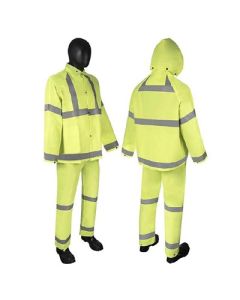
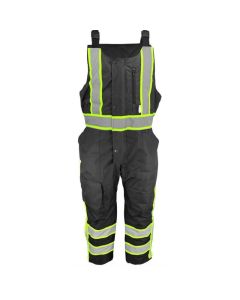
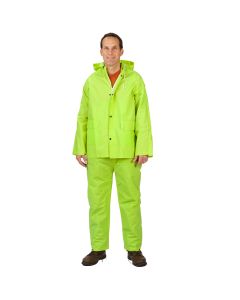
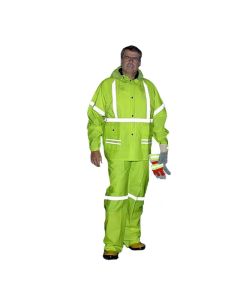
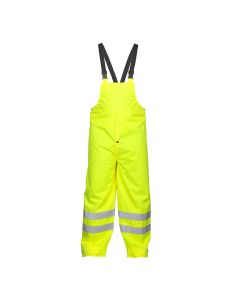
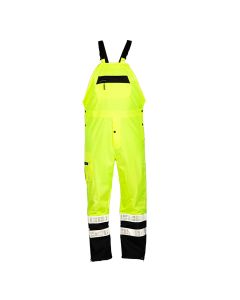
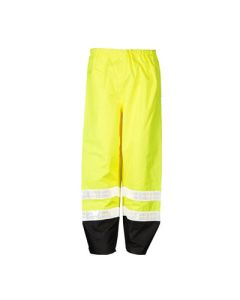
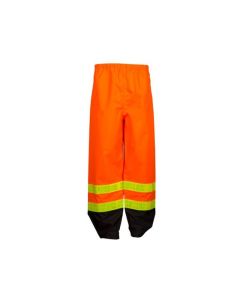
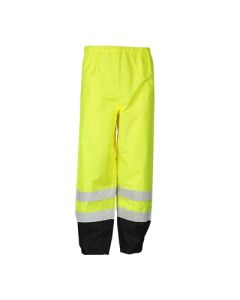
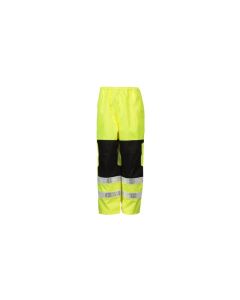
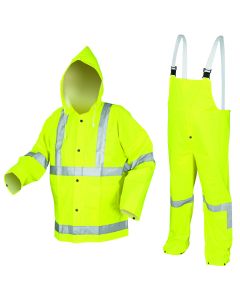
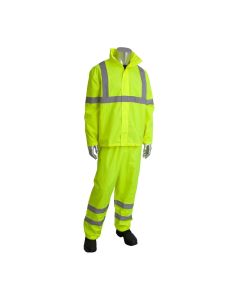
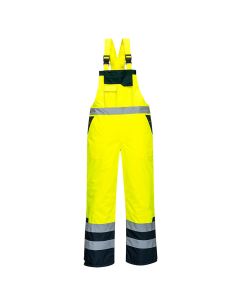
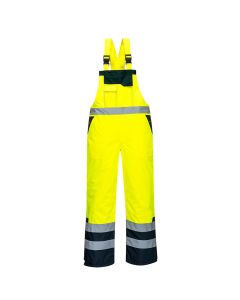
Quick Comparison- Pants vs Bibs vs Insulated Bibs
|
Feature
|
Hi-Vis Rain Pants
|
Rain Bib Pants
|
Insulated Rain Bibs
|
|
Coverage
|
Waist to ankle
|
Chest to ankle
|
Chest to ankle
|
|
Waterproof Seal
|
Moderate
|
High (no waist gap)
|
High
|
|
Cold Weather Protection
|
Low
|
Moderate
|
High (thermal lining)
|
|
Best For
|
Short exposure
|
Heavy rain
|
Cold + heavy rain
|
|
Layering
|
Easy
|
Excellent
|
Built-in insulation
|
Recommendation-
- 1. Choose rain pants for light rain and short tasks.
- 2. Choose rain bibs for all-day wet conditions.
- 3. Choose insulated bibs for freezing rain, snow, and winter operations.
Construction Workers & Site Laborers
Work Environment- Mud, debris, heavy movement, kneeling, lifting, unpredictable weather.
Recommended Gear-
- 1. Heavy-duty hi-vis rain bibs
- 2. Reinforced waterproof rain pants
- 3. Rain bib overalls with reinforced knees
- 4. PVC-coated polyester rain gear
Why Bibs Work Best-
Construction workers frequently bend, crouch, and climb. Bib-style rain pants extend to the chest, preventing water from entering at the waist and providing better coverage during active movement.
Key Features Needed-
- 1. Abrasion-resistant materials
- 2. Reinforced stitching
- 3. Sealed seams
- 4. ANSI/ISEA compliant reflective striping
- 5. Boot access zippers
For colder seasons, insulated hi-vis rain bibs provide waterproof protection and thermal retention without limiting mobility.
Road Crews & Traffic Control Personnel
Work Environment-Active traffic zones, low-light conditions, serious accident risk.
Recommended Gear-
- 1. ANSI Class 3 hi-vis rain bibs
- 2. High-visibility rain pants with 360° reflective tape
- 3. Black-accented hi-vis pants (for professional appearance)
- 4. Waterproof bib overalls for extended exposure
Why Visibility Matters Most-
Road workers require maximum reflectivity during night shifts, foggy mornings, and heavy rain. High-visibility rain pants with fluorescent fabric and reflective striping ensure motorists and equipment operators can clearly see workers.
Key Features Needed-
- 1. 2-inch reflective striping
- 2. Fluorescent yellow or orange panels
- 3. Durable wind-resistant fabric
- 4. Adjustable suspenders for a secure fit
For long-duration shifts in rainstorms, rain bib overalls provide added torso coverage and reduce water penetration.
Utility Line Workers & Electrical Crews
Work Environment- Improved work, tight spaces, and emergency repairs during storms.
Recommended Gear-
- 1. Lightweight hi-vis waterproof trousers
- 2. Flexible rain bib pants
- 3. Insulated rain bibs for winter storm repair
- 4. Seam-sealed waterproof materials
Why Flexibility Is Essential-
Utility workers require rain gear that allows climbing, stretching, and overhead movement. Flexible polyurethane-backed fabrics provide mobility while maintaining waterproof integrity.
Key Features Needed-
- 1. Breathable waterproof materials
- 2. Non-restrictive shoulder straps
- 3. Secure closures
- 4. Insulated lining for cold-weather repair
During storm restoration work, insulated bib rain gear helps maintain body temperature while keeping moisture out.
Heavy Equipment Operators
Work Environment- Seated operation, repetitive entry/exit from equipment, exposure to wind and rain.
Recommended Gear-
- 1. Waterproof rain pants for mobility
- 2. Rain bib overalls for full coverage
- 3. Durable nylon-blend rain gear
- 4. Black hi-vis rain pants options
Why Durability Is Critical-
Operators frequently move in and out of cabs, which puts stress on seams and fabric. Reinforced waterproof rain bibs withstand daily friction and repeated motion.
Key Features Needed-
- 1. Reinforced seat and knees
- 2. Durable coated fabric
- 3. Easy on/off boot zippers
- 4. Flexible waist adjustments
Bib-style rain gear prevents gaps between jacket and pants when climbing into machinery.
Emergency Responders & Municipal Workers
Work Environment- Fast response, unpredictable weather, high mobility.
Recommended Gear-
- 1. Quick-don hi-vis rain pants
- 2. Rain suit bibs paired with waterproof jackets
- 3. Insulated hi-vis winter bibs for cold weather
- 4. Lightweight waterproof trousers for fast deployment
Why Speed Matters-
Emergency personnel need rain gear that can be put on quickly over existing uniforms. Rain bib pants provide reliable protection without complicated adjustments.
Key Features Needed-
- 1. Easy snap or zipper closures
- 2. Lightweight waterproof construction
- 3. High reflectivity for roadside emergencies
- 4. Compact storage capability
In winter operations, insulated rain bibs prevent cold stress during extended outdoor response.
Industrial & Warehouse Yard Operations
Work Environment- Loading docks, forklifts, yard logistics, mixed indoor/outdoor exposure.
Recommended Gear-
- 1. Hi-vis waterproof trousers for flexibility
- 2. Lightweight rain bib pants
- 3. ANSI-compliant reflective striping
- 4. Wind-resistant outer shells
Why Layering Helps-
Warehouse crews often transition between indoor and outdoor environments. Modular rain protection systems allow workers to layer bibs over standard uniforms as needed.
Key Features Needed-
- 1. Breathable waterproof fabrics
- 2. Adjustable suspenders
- 3. Reflective visibility
- 4. Durable yet flexible construction
Insulated vs Non-Insulated Options by Climate
Mild Rain Conditions-
- 1. Lightweight hi-vis rain pants
- 2. Standard waterproof rain bibs
Heavy Rain & Wind-
- 1. Rain bib overalls
- 2. Seam-sealed PVC-coated rain gear
Cold & Wet Weather-
- 1. Insulated hi-vis rain bibs
- 2. Hi-vis winter bib overalls
- 3. Thermal-lined waterproof bib pants
Selecting the right insulation level prevents cold-related fatigue and improves jobsite performance.
Safety & Compliance Across All Roles
Professional hi-vis rain gear is manufactured to meet ANSI/ISEA 107 standards where required.
Compliance ensures-
- 1. Proper fluorescent fabric coverage
- 2. Correct reflective strip placement
- 3. 360° visibility in hazardous environments
- 4. Reduced risk of accidents in traffic-exposed areas
For transportation, construction, utilities, and emergency services, compliant rainwear is essential PPE.
Built to Withstand Daily Wear
High-performance rain pants and bibs feature-
- 1. PVC-coated polyester construction
- 2. Polyurethane-backed flexible materials
- 3. Fully seam-sealed waterproof technology
- 4. Reinforced knees and stress points
- 5. Durable stitching for long-term use
Investing in premium rain gear reduces replacement frequency and improves worker morale.
Choosing the Right Gear for Your Role
Before purchasing, consider-
- 1. Your specific field role
- 2. Daily movement requirements
- 3. Climate and seasonal exposure
- 4. Duration of rain exposure
- 5. Required ANSI safety class
- 6. Layering preferences
Lightweight hi-vis waterproof trousers may work for short-term exposure, while heavy-duty insulated rain bib overalls are ideal for extended outdoor operations in harsh conditions.
Frequently Asked Questions
1. What are hi-vis rain pants used for?
Hi-vis rain pants protect workers from rain while increasing visibility in hazardous, low-light, or high-traffic environments.
2. Are rain bibs better than standard rain pants?
For extended exposure and active work, rain bibs offer better upper-body coverage and improved waterproofing.
3. Who should wear insulated rain bibs?
Workers in cold, wet environments such as winter construction, road maintenance, or storm response benefit from insulated rain bibs.
4. Can rain bibs be worn over work uniforms?
Yes. Most bib rain gear is designed for layering over regular clothing or base layers.
Professional Protection for Every Industry
From construction laborers to road crews, utility workers, agricultural teams, and emergency responders, role-specific hi-vis rain pants and waterproof rain bibs provide the performance, durability, and visibility required to work safely in wet conditions.
Get a premium Hi Vis Rain Pants with Hi Vis Kings and fulfill your work safety requirements today.